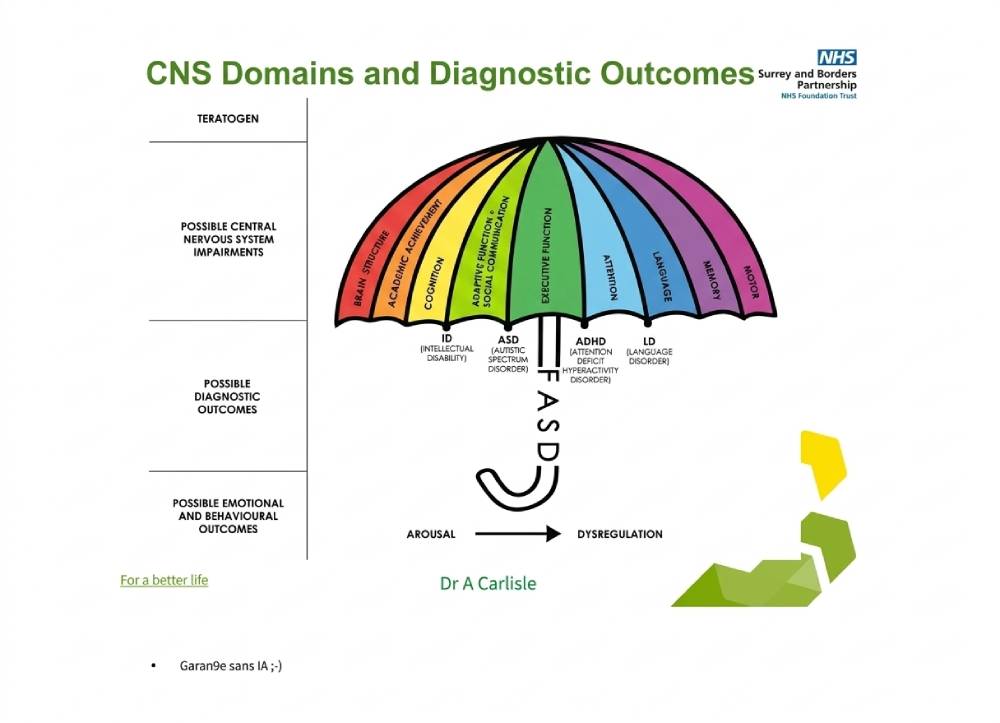
Your child has been diagnosed with FAS or FASD, yet you feel unsupported. Your child was exposed to alcohol during pregnancy and is facing challenges in life (at school, at work, or with the justice system).
You are an adult who suspects you may be affected by FASD and need guidance.Whatever the situation—whether you were exposed to alcohol in utero, are facing difficulties, or simply have questions—we are here for you.
Standard care for a pregnancy involving alcohol exposure—regardless of the risk level—should include monitoring as a high-risk pregnancy by your midwife.
At birth, all children are examined by a pediatrician before leaving the maternity ward. However, not all pediatricians are dysmorphologists or trained in FASD.
If the child receives an FASD diagnosis or is simply identified as having had in utero exposure, they should be seen by a pediatric neurologist.
Children exposed to alcohol during pregnancy should receive close monitoring, similar to that provided for premature babies. Specialized early intervention centers (CAMSP) should offer a specific consultation after 9 months.
Furthermore, general practitioners who are aware of FASD or trained in neurodevelopmental disorders (NDDs) should provide your child with attentive monthly follow-ups, in accordance with HAS guidelines. https://www.has-sante.fr/jcms/p_3161334/fr/troubles-du-neurodeveloppement-reperage-et-orientation-des-enfants-a-risque
They will know to refer the child to a CAMSP to understand the neurobehavioral difficulties being experienced, before the age of 6 (in reality, by age 5, given the long waiting times).
If the child is over 6 years old, an assessment by a coordination and referral platform (PCO) for neurodevelopmental disorders (TND) has been made available for children experiencing difficulties, through a center near you (non-exhaustive list).
https://www.handicap.gouv.fr/les-plateformes-de-coordination-et-dorientation-pcoThey will have the opportunity to meet with various specialists involved in assessing brain function for diagnosis and rehabilitation, following vision and hearing checks by healthcare professionals (ENT specialist and ophthalmologist). Approximation is not advisable.
Your primary care physician may feel qualified to initiate referrals to various professionals—such as a speech-language pathologist, orthoptist, psychomotor therapist, occupational therapist, psychologist, neuropsychologist, or physiotherapist (if motor disorders are involved), or even a child psychiatrist.
If you are fortunate enough to have a diagnostic center dedicated to FASD (Fetal Alcohol Spectrum Disorders) in your region—I am only aware of one in Réunion—you should ask your primary care physician for a referral to that center. Such centers should ideally be established in every region of France, whether formally or otherwise.
https://www.chu-reunion.fr/service/centre-de-diagnostic-de-lensemble-des-troubles-causes-par-lalcoolisation-foetale-etcaf/Finally, if your child is over 18—or if you are over 18 yourself—and there was prenatal alcohol exposure and you are experiencing difficulties in your life, there are few specialized centers available.
Come visit us (by appointment), write to us, or even give us a call: we will guide you!